Guatemala Entry Requirements 2026: Onward Ticket & Visa Guide
Disclaimer: This information is for educational purposes only and does not constitute legal advice. Entry requirements can change. Always verify with Guatemala's Instituto Guatemalteco de Migración (IGM), the nearest Guatemalan consulate, or your government's travel advisory. Proof of onward travel may be requested but acceptance is at the discretion of airlines and immigration officers.
Quick Answer
Do you need an onward ticket for Guatemala? Airlines routinely check for proof of onward travel at check-in, especially for one-way tickets. Guatemalan immigration may also request it on arrival. Citizens of more than 80 countries enjoy visa-free entry for up to 90 days under the CA-4 Border Control Agreement. Prepare exit documentation and your electronic declaration form before your flight to avoid boarding denial.
Introduction
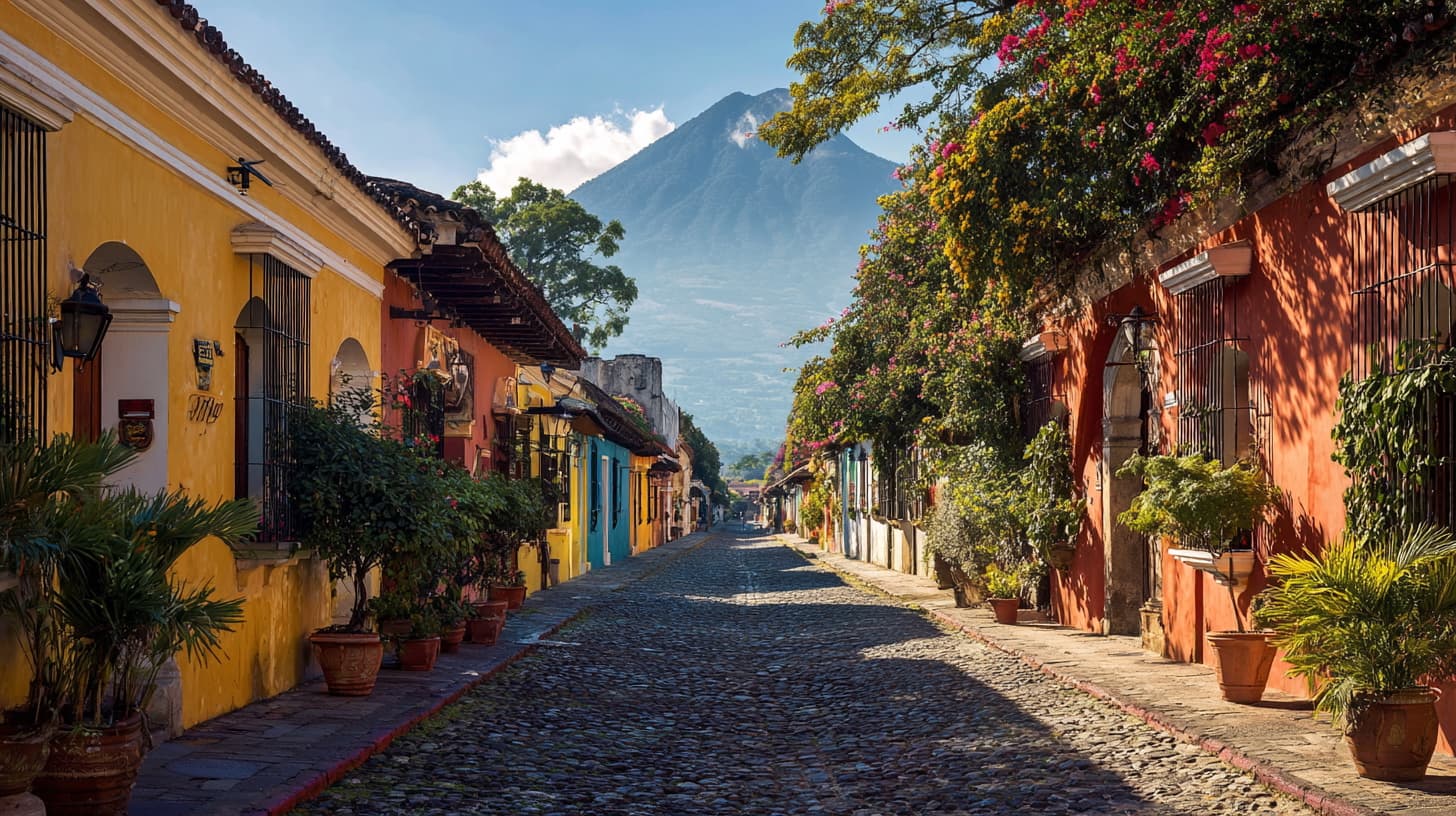
Planning a trip to Guatemala in 2026? From the ancient Mayan ruins of Tikal rising above the jungle canopy to the colonial streets of Antigua framed by volcanoes, Guatemala packs an extraordinary density of history and natural beauty into a country roughly the size of Tennessee.
Guatemala welcomes visitors from more than 80 countries with visa-free entry for up to 90 days under the CA-4 Border Control Agreement. The process is straightforward: complete an electronic declaration form before your flight, land at La Aurora International Airport in Guatemala City, get your passport stamped, and you're in. But one issue catches travelers off guard, particularly those on one-way tickets: proof of onward travel.
This guide covers everything you need to know about Guatemala's entry requirements in 2026, including the CA-4 agreement, airline enforcement of onward tickets, the electronic declaration form, extension options, overstay penalties, and the 2025 immigration regulation changes.
What Is an Onward Ticket?
An onward ticket is documentation showing your plan to leave Guatemala (or the CA-4 region) within your permitted stay. It demonstrates exit intent to airlines and immigration officials.
A valid onward ticket typically shows:
- A departure date within your 90-day CA-4 limit (or 180-day extended limit)
- A destination outside the CA-4 region (any country, though Mexico, Belize, and Costa Rica are most common)
- Passenger name matching your passport
The purpose is assurance you won't overstay, not verification of a confirmed, paid booking. Bus tickets to Mexico, flight itineraries, and shuttle reservations all qualify.
Does Guatemala Require an Onward Ticket in 2026?
Airline Checks (Primary Enforcement)
Airlines are the front line of onward ticket enforcement for Guatemala. If a passenger is denied entry on arrival, the airline must return them at their own expense, so they screen documentation before boarding.
When airlines most often request proof:
- One-way inbound tickets (highest risk)
- Visa-free travelers without a return flight
- Flights originating from outside Central America
- Specific carrier policies (Avianca, United, and American Airlines are among the most consistent)
Major airlines serving Guatemala that check onward tickets: Avianca, United Airlines, American Airlines, Delta Air Lines, Spirit Airlines, JetBlue Airways, Copa Airlines, Aeromexico, Volaris, Frontier Airlines, Iberia (seasonal from Madrid), and Alaska Airlines.
Immigration Checks (IGM)
Guatemala's immigration is handled by the Instituto Guatemalteco de Migración (IGM). Officers at La Aurora International Airport (GUA) and at land borders may ask about your onward travel plans and purpose of visit.
Travelers report that IGM officers at the airport occasionally ask about itinerary and departure plans but rarely deny entry over missing onward tickets alone. At land border crossings from Mexico and Belize, checks tend to be more relaxed. However, enforcement varies by officer and season.
Bottom line: Airlines are the primary checkpoint. IGM is a secondary layer. Having documentation ready for both eliminates any risk.
Entry Requirements by Visa Category
Visa-Free Entry (Category A, 80+ Countries)
The majority of Western travelers enter Guatemala without a visa. On arrival, IGM stamps your passport with an entry date and authorized stay of up to 90 days.
Key facts:
- Maximum stay: 90 days shared across all CA-4 countries (extendable to 180 days total)
- Passport validity: At least six months beyond your date of entry
- Blank pages: At least one (UK government recommends two)
- Onward ticket: Not a formal legal statute but enforced by airlines and sometimes IGM
- Eligible nationalities: US, Canada, UK, all EU states, Australia, New Zealand, Japan, South Korea, Mexico, South Africa, Israel, and most Latin American countries
Important: Unlike some countries that issue a separate tourist card, Guatemala uses a simple passport stamp. There is no separate document to keep. However, your entry stamp is critical. If your passport is not stamped on arrival, you will face fines and significant delays on departure. If you notice a missing stamp, return to the immigration desk immediately or visit the IGM office in Guatemala City.
Category B Countries (Consular Visa Required)
Nationals of Category B countries (including India, Moldova, Jamaica, and others) must normally obtain a visa at a Guatemalan consulate before traveling. However, there is an important exception: Category B nationals holding a valid visa or residence permit from the United States, Canada, Mexico, or a Schengen-area country can enter Guatemala visa-free for 90 days without a separate Guatemalan visa.
This exception does not apply to nationals of certain countries listed by the IGM, including Afghanistan, China, Iraq, Iran, North Korea, and others.
Category C Countries (Consulted Visa Required)
Nationals of Category C countries (including China) must apply for a visa at a Guatemalan consulate and attend an in-person interview. The single-entry tourist visa costs USD 25, and the multiple-entry tourist visa costs USD 50. Processing typically takes several weeks.
The CA-4 Border Control Agreement
Guatemala is part of the Central America-4 (CA-4) Border Control Agreement along with Honduras, El Salvador, and Nicaragua. This agreement is fundamental to understanding how your stay works:
- Your 90-day clock starts when you enter any CA-4 country, not just Guatemala
- Crossing borders between CA-4 countries does not reset the clock
- Immigration officers at each CA-4 border record your remaining days
- To restart your 90-day period, you must exit to a non-CA-4 country (Mexico, Belize, or Costa Rica are the most common choices)
- Each CA-4 country may interpret and enforce the agreement slightly differently
- If you are expelled from one CA-4 country, you are excluded from the other three
Important for UK nationals: While the CA-4 allows visa-free travel between all four countries, British nationals require a visa for Honduras specifically. The CA-4 agreement includes Honduras, but UK entry requirements for Honduras are separate.
What Happens Without an Onward Ticket?
If requested and you can't provide proof:
- Denied boarding -- the most common outcome, particularly at departure airports
- Forced ticket purchase -- airlines may require you to buy a return flight on the spot (often USD 200-500+)
- Extended questioning at immigration -- IGM may interview you more thoroughly about your plans and finances
- Check-in delays -- even if eventually cleared, expect significant delays while the airline verifies your situation
- Rare: entry refusal -- in extreme cases, IGM can refuse entry if they believe you intend to overstay
When Onward Tickets Are Rarely Checked
You're less likely to face scrutiny if:
- You have a round-trip ticket with a clear return date
- You are entering from Mexico or Belize by land (land borders are generally more relaxed)
- You hold a work or student visa
- You have proof of residency in another country
- You are transiting through Guatemala with confirmed onward tickets
The Electronic Declaration Form (DJRV)
Before entering or exiting Guatemala by air, all travelers must complete the Declaración Jurada Regional de Viajero (DJRV) electronically. This replaced the old paper form and is now mandatory.
How it works:
- Access the form through the SAT Portal (portal.sat.gob.gt) or the direct link provided by your airline
- Available in Spanish and English
- Can be completed up to 15 days before your flight (some sources say 3 days)
- Enter your passport number, flight details, destination, accommodation address, and customs declarations
- After submission, you receive a QR code and declaration number by email
- Airlines may require proof of completion before check-in
- Immigration officers will scan your QR code on arrival
Critical warning: Several third-party websites charge USD 74 or more for this same form. The official government form on the SAT Portal is completely free. Look for the URL containing "sat.gob.gt" to ensure you are on the official site.
Tip: You must also complete the DJRV when departing Guatemala. Fill it out before you head to the airport to avoid delays.
Other Guatemala Entry Requirements
Proof of Funds
Guatemala may request proof that you can financially support your stay. While not routinely demanded at the airport, the commonly cited benchmark is approximately USD 50 per day. An international credit card with available credit is the most commonly accepted form of proof. Bank statements and cash are also considered. The visa extension process specifically requires either a credit card, onward ticket, or Guatemalan guarantor.
Passport Validity
Multiple official sources confirm your passport must be valid for at least six months beyond your date of entry into Guatemala, with at least one blank page. The U.S. State Department takes a less strict position, stating only that your passport must be "valid when you enter." However, the Guatemalan embassy in Washington, the UK government, and Canada's travel advisory all require six months.
Practical recommendation: Travel with at least six months of passport validity and one or two blank pages. Airlines routinely deny boarding to passengers whose passports do not meet the six-month rule.
Cash Declaration
There are no restrictions on the amount of currency you can bring into or take out of Guatemala. However, if you carry USD 10,000 or more (or the equivalent), you must declare the source and purpose on the electronic declaration form (DJRV). This applies both on entry and departure.
Health Requirements
Guatemala does not require vaccinations for travelers arriving from the US, Canada, UK, Europe, or most other non-risk countries. However, there is one notable exception:
Yellow fever: A vaccination certificate is required if you are arriving from a country with risk of yellow fever transmission or have had an airport layover of more than 12 hours in such a country. Risk countries include most of tropical South America (Brazil, Colombia, Ecuador, Peru, Bolivia, Venezuela, Paraguay, and others) and much of sub-Saharan Africa. The certificate is valid for life.
Yellow fever itself is not a risk in Guatemala. No malaria prophylaxis is needed for most tourist areas (Antigua, Lake Atitlán, Guatemala City), though the CDC notes some malaria risk in rural lowland areas. All COVID-19 entry requirements have been lifted.
Travel health insurance is not mandatory but is strongly recommended.
Departure Tax
Guatemala charges a USD 30 airport departure tax for travelers leaving by air. This is almost always included in the price of your airline ticket. There is also an additional airport security fee of 20 quetzales (approximately USD 2.50) that may be charged separately. There is no departure tax at land borders. Departing by sea costs USD 10.
Customs and Agricultural Controls
Guatemala's Customs authority (SAT) controls the import of goods through the electronic declaration form. Personal belongings including cameras, electronics, clothing, and medicine are permitted duty-free.
Duty-free allowances include 80 cigarettes or 100 grams of tobacco (adults only) and 1.5 liters of alcoholic beverages (adults only). Fresh food products, live animals, firearms, and unprocessed agricultural items require specific permits. Declare everything honestly on the DJRV.
Traveling with Children
Guatemala enforces strict rules for minors at both entry and departure:
- Children under 18 traveling alone or with only one parent/guardian must have a notarized letter of consent in Spanish from the non-traveling parent(s) or guardian(s), approved by the nearest Guatemalan mission
- Single parents may need additional documentation
- Children traveling with both parents typically do not need special permission
- These rules apply both when entering and departing Guatemala
- Enforcement varies, but the requirement is taken seriously at airports
Contact the nearest Guatemalan embassy or the IGM for specific document requirements.
Overstay Penalties
If you overstay your authorized period in Guatemala, you must pay a fine before you can leave the country.
Fine structure:
- 15 Guatemalan quetzales (GTQ) per day of unauthorized stay (approximately USD 2 per day, confirmed by the U.S. State Department)
- The fine must be paid to the Instituto Guatemalteco de Migración (IGM) before departure
- Payment can be made at the main IGM office in Guatemala City (6a Avenida 3-11, Zone 4), or at the airport, though airport processing can cause serious delays and risk missing your flight
- Payment is in quetzales (cash)
Process to pay the fine:
- Visit the IGM office in Guatemala City (Monday to Friday, 8:00 AM to 4:30 PM) or the immigration desk at the airport
- Present your passport showing the overstayed entry stamp
- The clerk will calculate your fine based on the number of days overstayed
- Pay the fine at the BanRural bank window in the IGM building (or at the designated desk at the airport)
- Receive a receipt and clearance to depart
Warning: If you arrive at the airport without having resolved your overstay, expect to be sent to a payment desk upstairs, pay the fine, return through security, and then clear immigration. This process can take over an hour and may cause you to miss your flight. Always resolve overstay issues before heading to the airport.
If your passport is lost or stolen, you must obtain a replacement from your embassy and get a new entry stamp from IGM. A fine of approximately USD 100 may apply for not having the original entry stamp.
Serious or repeated overstays can result in expulsion proceedings and future entry restrictions.
How to Extend Your Stay
Guatemala allows a single extension equal to the days originally granted (typically 90 days), bringing the maximum legal stay to 180 days within the CA-4 region.
Extension details:
- Fee: USD 25 (paid in Guatemalan quetzales, approximately Q200, at the BanRural window inside the building)
- Where to apply: Departamento de Extranjería, Instituto Guatemalteco de Migración, 6a Avenida 3-11, Zona 4, Guatemala City
- Hours: Monday to Friday, 8:00 AM to 4:30 PM (arrive before 11:00 AM for same-day processing)
- Required documents: Valid passport with entry stamp, photocopy of passport bio page and entry stamp, proof of onward travel or international credit card (front and back photocopy), and completed extension application form (available for Q1 at the copy center in the building)
- Processing: Typically same-day, though waits can be long
- Children: Extensions for minors require a parent to apply, with a copy of the child's birth certificate
After 180 days, you must leave the CA-4 region. Many travelers do a border run to Mexico (La Mesilla, El Ceibo, or Ciudad Hidalgo crossings) or Belize (Melchor de Mencos) to restart their 90-day period. A minimum stay of 72 hours outside the CA-4 is generally recommended before re-entering, though no formal rule specifies exact timing. Immigration may question travelers who do this frequently.
Important: The extension applies to your total CA-4 stay, not just Guatemala. If you spent 30 days in Honduras before coming to Guatemala, those 30 days count against your 90-day limit.
New since October 2025: Guatemala implemented new immigration regulations (Agreements IGM-015, 016, and 017-2025) that primarily affect residency permits, work visas, and the guarantor system. These changes introduced new categories including remote worker and digital nomad residence permits, requiring proof of USD 2,000 per month income (USD 3,000 with dependents). Tourist visa processes and the CA-4 extension system remain largely unchanged.
What Travelers Report
Based on aggregated experiences from forums and travel communities:
La Aurora International Airport (GUA) immigration is generally efficient. Most travelers report brief interactions, receiving their passport stamp within minutes. Questions about onward travel are asked occasionally. The electronic declaration form QR code is checked consistently, with airlines and immigration both asking for it.
Land border crossings from Mexico and Belize are common and straightforward. The La Mesilla crossing to/from Mexico and the Melchor de Mencos crossing to/from Belize are well-established routes. Onward ticket checks at land borders are rare. Be aware that some border officials may illegally request an "entry fee." Ask for an official receipt and the request is usually dropped.
Airlines departing from the United States are the strictest checkpoints. Travelers report that Avianca, United, American Airlines, and Spirit are the most consistent about requesting onward travel proof at departure gates in the US.
The DJRV electronic form catches people off guard. Several travelers report being asked for the QR code at airline check-in counters in the US and at immigration on arrival. While some airlines have not yet fully adopted the check, completing the form in advance is strongly recommended.
Guatemala Entry Updates for 2026
Current as of March 2026:
- New immigration regulations (October 2025): Agreements IGM-015, 016, and 017-2025 introduced new residency categories including remote workers and digital nomads, streamlined investor visa requirements (minimum USD 100,000), and modified the guarantor system. These changes primarily affect long-term residents, not tourists.
- Stricter migration-related criminal penalties (March 2025): Guatemala's Congress enacted Decree No. 2-2025, increasing penalties for migration-related offenses and credit card cloning. These primarily target human smuggling networks, not tourists.
- Category B visa exceptions expanded: Nationals of Category B countries can still enter visa-free with a valid US, Canada, Mexico, or Schengen visa. Nationals married to Guatemalans (6+ months) or with Guatemalan children are now upgraded to Category A (visa-exempt) under the 2025 regulations.
- US-Guatemala relations: The US and Guatemala signed a reciprocal trade agreement framework in November 2025 and various immigration cooperation agreements. These affect bilateral relations but do not change tourist entry requirements.
- Electronic declaration form (DJRV): Now fully established and consistently enforced at La Aurora Airport. The free government portal remains the only official way to complete it.
- ASISTUR tourist assistance: Guatemala's Tourist Assistance Program (ASISTUR) continues operating with tourist police (DISETUR) in Antigua, Lake Atitlán, Tikal, Quetzaltenango, Puerto Barrios, and Cobán. Emergency line: dial 1500 from a Guatemalan phone or +502-2290-2810. WhatsApp: +502-5188-1819.
Monitor for changes: Check the IGM website (igm.gob.gt) and your government's travel advisory for the most current requirements.
Prepare Your Documentation
Avoid last-minute stress and expensive airport ticket purchases. Guatemala's entry process is straightforward for the vast majority of travelers, but airlines enforce onward ticket requirements strictly, especially for one-way flights. Complete your electronic declaration form on the free SAT Portal, prepare proof of onward travel in advance, and ensure your passport meets the six-month validity rule. With documentation ready, check-in and immigration are smooth.
Need Proof of Onward Travel?
Generate a professional flight itinerary accepted by airlines and immigration in 30 seconds.
Create My ItineraryGuatemala Entry Types and Onward Ticket Risk Level
| Entry Type | Maximum Stay | Onward Ticket Risk | Who Checks |
|---|---|---|---|
| Visa-Free (Category A) | 90 days (CA-4 shared, extendable to 180) | High for one-way flights | Airlines (primary), IGM immigration |
| Category B Visa | 90 days | High | Airlines (primary), IGM immigration |
| Category C Visa (consulted) | 90 days | High | Airlines (primary), IGM immigration |
| B/C with US/Canada/Schengen visa | 90 days (CA-4 shared) | Medium-High | Airlines (primary), IGM immigration |
| Work/Student Visa | Per visa terms | Very Low | Rarely checked |
| Transit (no immigration) | N/A | None for Guatemala | N/A |
Guatemala Entry Requirements by Nationality
| Country/Region | Visa Required | Maximum Stay | Notes |
|---|---|---|---|
| United States | No | 90 days (CA-4) | Passport valid 6 months; electronic declaration required |
| Canada | No | 90 days (CA-4) | Passport valid 6 months beyond departure |
| United Kingdom | No | 90 days (CA-4) | Passport valid 6 months with 2 blank pages |
| EU Member States | No | 90 days (CA-4) | Passport valid 6 months |
| Australia | No | 90 days (CA-4) | Passport valid 6 months |
| Japan | No | 90 days (CA-4) | Passport valid 6 months |
| South Korea | No | 90 days (CA-4) | Passport valid 6 months |
| New Zealand | No | 90 days (CA-4) | Passport valid 6 months |
| Mexico | No | 90 days (CA-4) | Passport valid 6 months |
| South Africa | No | 90 days (CA-4) | Passport valid 6 months |
| India (Category B) | Conditional | 90 days | Visa-free with valid US, Canada, Mexico, or Schengen visa; otherwise consular visa required |
| China (Category C) | Yes | 90 days | Consular visa with interview required; no exception for US/Schengen visa holders |
Frequently Asked Questions
Is an onward ticket required for Guatemala entry?
How long can US citizens stay in Guatemala without a visa?
Do airlines check for onward tickets to Guatemala?
What happens if I don't have an onward ticket for Guatemala?
What is the CA-4 Border Control Agreement?
What are the passport requirements for Guatemala?
Can I extend my tourist stay in Guatemala?
What are the overstay penalties in Guatemala?
Do I need a yellow fever vaccination for Guatemala?
What is the electronic declaration form for Guatemala?
How much cash can I bring into Guatemala?
Are there special rules for children traveling to Guatemala?
Quick Tips for Smooth Entry
- Complete the electronic declaration form (DJRV) on the official SAT Portal before your flight. Use only the free government site (portal.sat.gob.gt), not third-party sites that charge USD 74 or more for the same form.
- Get your passport stamped on entry. Missing the stamp will result in a fine and delays when you depart. If you notice it was missed, return to the immigration desk or visit the IGM office in Guatemala City immediately.
- The 90-day CA-4 clock starts when you enter ANY of the four countries (Guatemala, Honduras, El Salvador, Nicaragua). Crossing between them does not reset it. To restart your 90 days, exit to Mexico, Belize, or Costa Rica.
- One-way flights face significantly more onward ticket checks than round-trip bookings, both from airlines and Guatemalan immigration.
- If planning to extend your stay, visit the Departamento de Extranjería (IGM) in Zone 4 of Guatemala City before your 90 days expire. The extension fee is USD 25, paid in quetzales.
- Border runs to Mexico or Belize are a common way to reset your CA-4 clock. Many travelers use the La Mesilla or El Ceibo crossings to Mexico, or Melchor de Mencos to Belize. Stay at least 72 hours outside the CA-4 before re-entering.
- It is illegal for border officials to charge an entry fee at Guatemalan land borders. If asked to pay, request an official receipt. The request is usually dropped.
- If traveling with children under 18, carry a notarized consent letter in Spanish from any non-traveling parent. This is enforced on both entry and departure.
- Carry proof of sufficient funds. While not routinely demanded, immigration may request evidence of approximately USD 50 per day. An international credit card or bank statements work.
- Save a PDF of your DJRV QR code and onward travel documentation on your phone, and print backups. Airlines and immigration accept both digital and printed proof.
Official Sources
For the most current information, always verify with official sources:
Last verified: March 2026
Last verified: March 2026
Last verified: March 2026
Last verified: March 2026
Last verified: March 2026
Last verified: March 2026